


A new study finds that the melting of polar ice caps is happening at an “unprecedented” rate and could have major implications for global sea level rise.
Researchers from NASA and the University of California, Irvine analyzed satellite data and found that the rate of melting over the past two decades has been twice as fast as it was during the previous two decades.
The study found that the Arctic is losing ice at a rate of 13.4 trillion metric tons per year, while the Antarctic is losing ice at a rate of 3.6 trillion metric tons per year.
The research team says that the melting of polar ice caps is one of the major contributors to global sea level rise, which is a major concern for coastal communities around the world.
The study’s lead author, Eric Rignot, says that the findings highlight the need for urgent action to reduce greenhouse gas emissions.
“If we don’t act now, the ice sheets could reach a point of no return in the next few decades,” Rignot said. ” This study provides further evidence that we are on a path toward an ice-free planet.”
Although we are expected to significantly reduce emissions in the coming decades, more than a third of the world’s glaciers will disappear before the end of the century. At the moment, 95% of the oldest and thickest sea ice in the Arctic has already melted.
What Year Will The Ice Caps Fully Melt?
 Credit: qsstudy.com
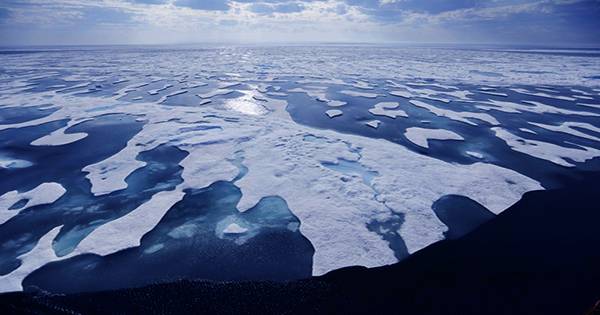
The ice caps are melting at an alarming rate and some scientists believe that they could be fully melted within the next century. The effects of this would be catastrophic, as it would cause sea levels to rise and displace millions of people. It would also disrupt global weather patterns and cause extreme weather conditions. We must do everything we can to reduce our greenhouse gas emissions in order to prevent this from happening.
Every year, Antarctic and Greenland ice sheets lose an average of 427 billion metric tons of ice. That is enough to make over 1.1 billion tons of goods each day. In any case, the melting of the ice caps is likely to continue for some time. There is no chance that the Earth will become completely ice-free in our lifetimes. In the modern era, the poles have largely been ice-free. Dinosaurs roamed Antarctica and alligators swam in Alaska prior to the start of the Ice Age. According to the Paleocene epoch, temperatures averaged between 5 and 9 degrees Fahrenheit more than they are now between 3 million and 4 million years ago.
millimeters are currently used to measure sea level rise, but this may change. According to one study, ice sheets begin to add tens of millimeters to sea levels every decade under the worst-case scenario. In just five years, a glacier in Greenland has increased its speed by more than 200%. Multiple ice sheets in Antarctica are said to be at risk of collapse at a rate of nearly every 10 years. If these melt, the sea level could rise by as much as 3 feet. Because ice is so thick on Earth, releasing even a small amount of it can cause significant changes.
The World’s Ice Sheets Are Melting: What Does That Mean For Our Coastlines?
For the most part, the answer is no. The Earth will never be submerged. It is however critical to distinguish between our coastlines and those of other countries. If all of the ice on Antarctica, Greenland, and other mountain glaciers melted, sea levels would rise by 70 meters (230 feet).
If the ice sheet is to continue to melt, it will have to go through a period of extreme scrutiny. If the ice sheet completely melts, global sea levels would rise by up to 20 feet, inundating islands and coastal areas all over the world.
A full melt of all of the glaciers and ice caps on Earth would flood every coastal city on the planet, raising global sea levels by approximately 70 meters (approximately 230 feet).
Is The Polar Ice Cap Melting?
 Credit: New York Post
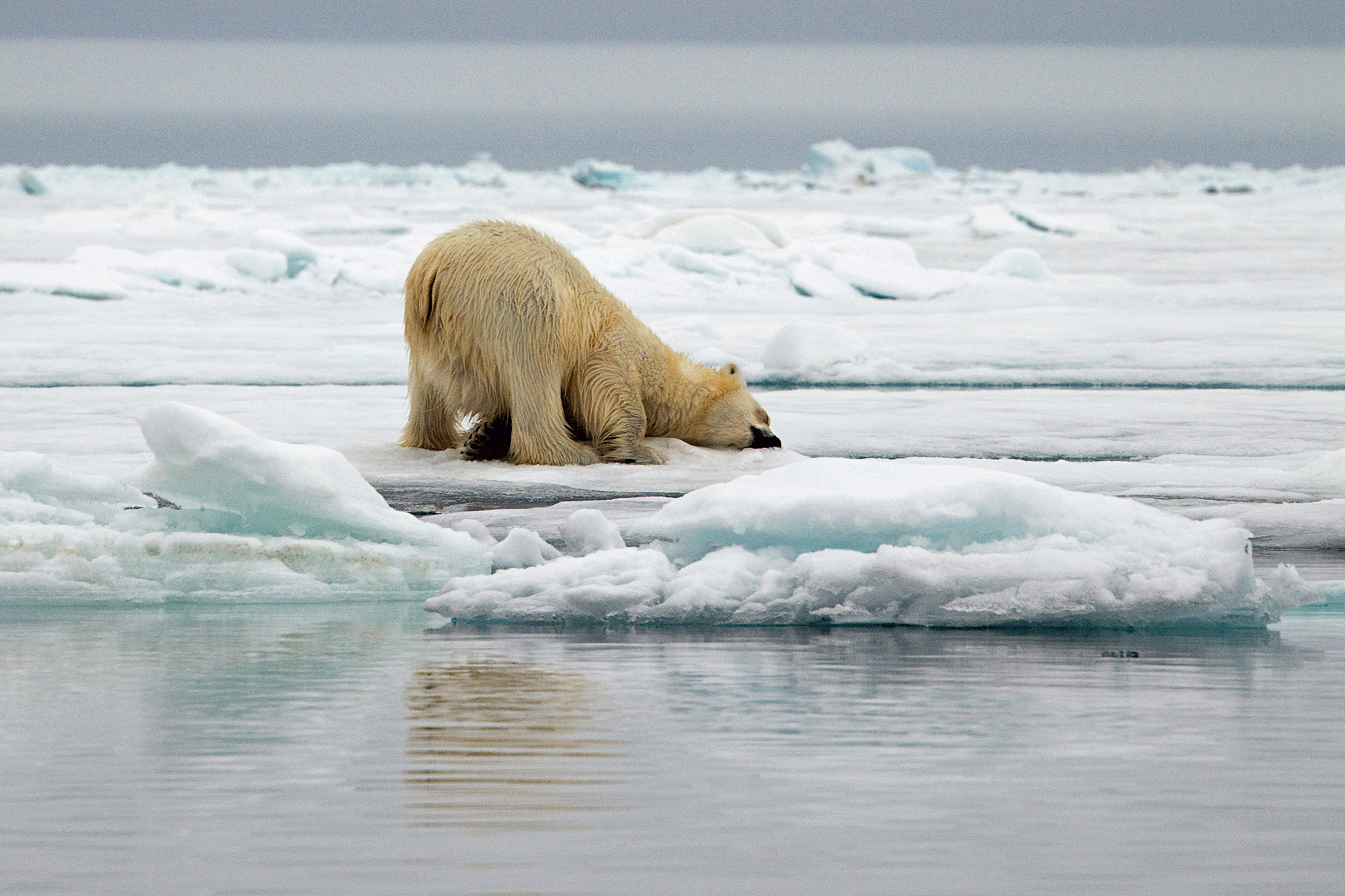
Global warming is causing polar ice caps to melt and contribute to climate change. Over the last 30 years, the oldest and thickest ice in the Arctic has declined by a stunning 95%, and we have lost nearly 13% of Arctic sea ice per decade.
According to scientists, polar ice caps are rapidly melting. Between 1992 and 2017, the ice age in Greenland and Antarctica lost over 6tn tonnes of ice, with 60% of that loss caused by melting in the region. The melting of polar ice caps will lead to global warming, which will cause further melting. Every year, the global temperature rises, causing more melting of ice and snow. With increased levels of water, the possibility of swallowing islands and nations rises. If we don’t learn more about what’s going on inside the polar ice caps, we’ll lose all of our oceans and continents underwater. Over the last three decades, the amount of ice in the Arctic Ocean has declined by 95 percent.
The Arctic could become ice-free every 100 years if we keep warming to 1.5 degrees Celsius above pre-industrial levels. If we went above 2 degrees Celsius, we could expect it to happen once every three years. The rise in sea levels will impact cities such as Miami, Osaka, Alexandria, and Rio de Janeiro. Because of global warming, several species of marine and land mammals may be extinct. As a result of this, marine life, including the polar bear, will suffer greatly. As a society, it is critical to raise awareness before it is too late.
Are Ice Sheets Increasing Or Decreasing?
The loss of ice mass (e.g., ice melting) in Antarctica at an average rate of about 150 billion tons per year, as well as a loss of approximately 280 billion tons per year, has contributed to sea level rise.
Why Are Ice Sheets Decreasing?
Warmer climates are known to have an impact on ice sheets in several ways. The most visible result thus far has been a loss of ice in the oceans and on land due to warmer temperatures. When the temperature rises, ice melt becomes more rapid, and ice flows rapidly to the sea, especially in low-elevation areas near the edges of ice sheets.
Is Antarctica Gaining Or Losing Ice?
The date of the beginning of the year 2021 has been set. Over the last few decades, the size of the Antarctic ice sheet has fluctuated. According to a study based on satellite data, between 2002 and 2020, Antarctica shed an average of 149 billion metric tons of ice per year, resulting in sea level rise.
Is Antarctica Growing Or Melting?
Despite the fact that some areas of the massive ice sheet have grown, the overall extent of Antarctica’s loss of ice has accelerated, with glaciers in West Antarctica experiencing the greatest rate of ice loss. A new ice shelf has been discovered in the Antarctic Peninsula, which is also causing the continent’s land mass to shrink.
Polar Ice Caps Melting Facts
There is a lot of misinformation out there about the polar ice caps melting. Here are some facts:
The Earth’s polar ice caps are melting at an alarming rate.
The Arctic ice cap has lost an estimated 40% of its volume over the last four decades.
The Antarctic ice cap is also melting, though at a slightly slower rate. It has lost around 3% of its volume since 1979.
The melting of the polar ice caps is causing sea levels to rise.
The polar ice caps are a major source of fresh water for the planet. As they melt, they are adding more water to the oceans, which is causing sea levels to rise.
The melting of the polar ice caps is also having a major impact on the global climate. The loss of ice is causing the Earth to absorb more heat, which is contributing to global warming.
The melting of the polar ice caps is a serious problem that is only going to get worse in the future. We need to take action now to reduce our greenhouse gas emissions and slow the rate of climate change.
Excess heat from space is reflected back into the Earth, lowering the planet’s temperature. Every year, ice sheets in Greenland and Western Antarctica are losing significant amounts of ice. Flooding along the coast can cause 400 million people to be affected each year. If greenhouse gas emissions continue to rise, the Arctic could become ice-free in the summer by 2040. The formation of ice caps can be attributed to snow that accumulates and does not melt in cold weather. Antarctica has as much ice as Mexico and the United States combined. If the temperature rises slightly in the Arctic, it can have disastrous effects.
Ice caps serve as a scientific tool for learning about Earth’s history. Over the last 30 years, the thickness and age of the oldest and thickest ice in the Arctic have decreased by 95%. Because of the loss of our ice caps, we will be contributing to global warming by rising sea levels. In order to save our polar ice caps and glaciers, we must not lose sight of the gravity of the situation.
Effects Of Melting Ice Caps
The effects of melting ice caps are far-reaching and potentially catastrophic. The loss of ice mass affects global sea levels, ocean circulation, and weather patterns. It also threatens the habitats of polar bears, seals, and other Arctic animals. The economic and social impacts of melting ice caps are also significant, as they threaten coastal communities, fishing industries, and tourism.
Rapid and extreme changes are taking place in the Arctic and Antarctic. Sea ice is rapidly melting, resulting in a wide range of concerns and a diverse range of outcomes. The melting ice releases both carbon and carbon dioxide, as well as methane, a greenhouse gas that emits 23 times more heat than carbon dioxide. Polar regions are the most dangerous and detrimental members of the coalmine because they act as a laboratory for global warming’s harmful and deleterious effects. With rising temperatures, the ice melts, the surface is exposed to more sunlight, and the water and land surface become hotter. The brown tundra of the Arctic Ocean remains as long as sea ice remains on the surface of the ocean water; when sea ice melts, the deep blue ocean becomes visible. A decrease in the amount of full ice and snow cover in the Arctic has taken 19 days to occur.
Because of the warming Gulf Stream, the Arctic’s surface temperature is twice that of the rest of the planet. Environmental changes at the poles have accelerated dramatically in recent years as a result of increased extreme weather events. It is possible that the poles will shift from stabilizers of the climate to primary drivers of the change. According to scientists, bacteria can be revived and turned into active, potentially lethal organisms if frozen for an extended period of time. If sea ice melt, it could have a negative impact on land masses and weather systems in the North Atlantic. Warmer conditions at the poles have an impact on the jet streams that flow in both the northern and southern hemispheres. There will be some warming of the planet’s climate overall, but jet stream changes can occasionally result in bizarre weather patterns.
According to experts, such weather events will only increase as the poles warm up. Ice was up to 150 feet thick at the former North Pole ice pack, but it has since thinned and weakened. Pole restoration cannot be accomplished easily because the poles were encased in ice prior to the greenhouse gas cutoff. Even the most basic changes, such as limiting carbon emissions, can be beneficial in slowing or even stopping the pace of climate change.
The Costs Of Melting Ice
When all of the world’s ice glaciers melt, sea level rises by about 230 feet. As the oceans pushed toward all coastal cities, all of them would be submerged. As a result, there would be a significant reduction in land area. It is possible that some cities, such as Denver, will not survive.
According to a recent study, glacier retreat tracks atmospheric carbon dioxide levels closely, and as glaciers melt, their loss will have a significant impact on fresh water supplies, as well as a number of other human activities.
Warming occurs as a result of melting ice. The ocean and land absorb more solar radiation due to their darker colors, releasing heat into the atmosphere as a result. The greenhouse effect is amplified as a result of this. As a result, as the ice melts, it causes more warming.
If current business-as-usual trends continue, it is estimated that the melting of sea ice and permafrost will result in up to $130 trillion in additional economic losses by the end of the century. If global warming is limited to 1.5C, the additional cost will be less than $10 trillion.

