Friction Stir Welding (FSW)
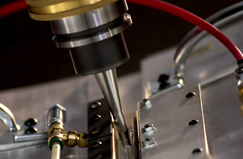
Eclipse Aviation pioneered the use of friction stir welding (FSW) in aircraft structures, using it extensively in the primary structure of the Eclipse 500 since receiving FAA approval in 2002. At 20 inches per minute, friction stir welding is approximately 10 times faster than manual riveting and provides a continuous join for improved structural rigidity. Friction stir welding patterns are computer-controlled to ensure accuracy, virtually eliminating time-consuming rework. The resulting airframe structures are stronger and lighter than those built using traditional processes.
PhostrEx™
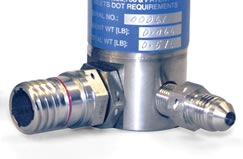
Eclipse Aviation developed the first new engine fire suppression system in 50 years, PhostrEx. Used exclusively on the Eclipse 500, PhostrEx is the only non-Halon engine fire suppression system approved by the Environmental Protection Agency and Federal Aviation Administration and is the first new engine fire suppression system to be approved since 1954. The result of these dual approvals is that PhostrEx is the only fire suppression system today that can meet the standards of the Montreal Protocol, an international treaty designed to protect the depletion of the earth's ozone layer. Until now, aircraft were exempt from the treaty and allowed to use Halon. That is, until a suitable replacement was available. That replacement is the PhostrEx fire suppression system.
> Learn the advantages of the PhostrEx fire suppression system.
> View a white paper on PhostrEx engine fire suppression (PDF).
> Visit the PhostrEx website.
High-Performance Manufacturing
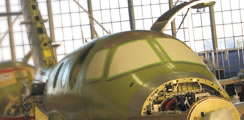
The Eclipse 500's aggressive pricing is only possible thanks to a design philosophy emphasizing high-volume production. We achieved this using modern manufacturing processes such as high-precision machined components in place of heavier, high-part-count assemblies, and standardized production that results in identical components that fit the first time, every time. Extensive use of 3-D design tools made it possible for Eclipse engineers to adhere to design tolerances typically reserved for high-performance military aircraft. And our options are packaged to allow operators to tailor their aircraft to their specific needs and tastes, while at the same time facilitating a steady flow of aircraft through the production process.